
Emergency Air Duct Cleaning Near Me: What Black Rock Homeowners Should Do First
Most duct “emergencies” in Black Rock are really triage problems. A dead animal in the supply plenum and a dusty register grille both get called emergencies by worried homeowners, but the health risk, the equipment, and the speed of response are completely different. Here’s the short version: shut the system down, photograph what you see, find the source of the event, and only then call. That sequence protects your home and gets a technician the right information. If you’d rather not sort it out alone, call (855) 337-1198.
Is It Actually an Emergency? A Black Rock Decision Tree
Before you dial anyone, ask what caused the problem. The cause determines the tier, and the tier determines whether you need cleaning in a hurry or a scheduled visit with the right containment gear. Most emergency calls we field in Black Rock fall into one of four groups, and only the first is truly urgent.
- Tier 1 – Sewage or flood contamination. Water backing up into the system or a flooded crawlspace feeding moisture into the ducts. Category 3 water carries pathogens. The system should stay off, and cleaning must include antimicrobial treatment and containment. This is the genuine call-now situation.
- Tier 1 – Fire or smoke residue. A kitchen fire, a chimney backdraft, or smoke pulled through a running system. Residue settles in the ducts and releases odor every time the blower runs. Smoke particles need HEPA negative-air filtration during cleanup, not a shop vac.
- Tier 2 – Pest intrusion. Rodent nesting, droppings, or a dead animal in a duct run. Urgent within a day or two, not within the hour. Droppings shouldn’t be disturbed before containment is set up.
- Tier 3 – Sudden unexplained odor. A musty smell that appeared overnight, or a chemical smell after a renovation. Worth investigating quickly, but a scheduled assessment with an inspection camera will answer more than a panicked same-hour visit.
If you’re in the third or fourth tier, waiting a day for a scheduled appointment with proper equipment is the smarter move. Paying a premium for speed on a problem that isn’t actually urgent helps nobody. What matters is matching the response to the cause.
What to Do in the First 30 Minutes Before a Technician Arrives
The first half hour is where homeowners either protect their home or make things worse. In our experience, the calls that go smoothest in Black Rock are the ones where the homeowner did three simple things before we arrived. None of them requires tools or a ladder.
- Shut the HVAC system off at the thermostat. Set it to off, not auto. A running blower spreads contamination through every duct in the house, including the ones not yet affected. This is the single most important step and it takes two seconds.
- Document everything with your phone. Photograph the register grilles, any visible staining around them, the water line if there was a flood, the pest evidence if you found it, and the room where the problem started. Photos of the scene before anyone touches it help a technician plan the job and confirm the source with real evidence rather than guesswork.
- Identify the event source. Was it a sewage backup, a fire, a rodent you saw, or a smell with no obvious origin? Write down when you first noticed it and whether it changed when the system ran. That timeline tells a technician almost as much as an inspection camera.
Keep the system off until someone qualified has looked at it. Don’t run a portable fan in the affected room, don’t spray air freshener into a register (it hides the odor and makes the source harder to trace), and don’t start pulling grilles off yourself if pest droppings are involved. In older Black Rock homes, a grille you remove can expose you to disturbed debris that should have been collected under containment.
Why You Shouldn’t Call a Handyman or a Regular HVAC Company for This
A handyman or a standard HVAC repair company is the wrong call for a true contamination emergency, and the reason is containment. Cleaning a contaminated duct system without negative-air filtration and sealed containment spreads the problem rather than solving it. A technician who brushes a duct with a shop vac and a wire brush, with no HEPA filtration pulling air out of the space, can push mold spores and rodent debris into the living area.
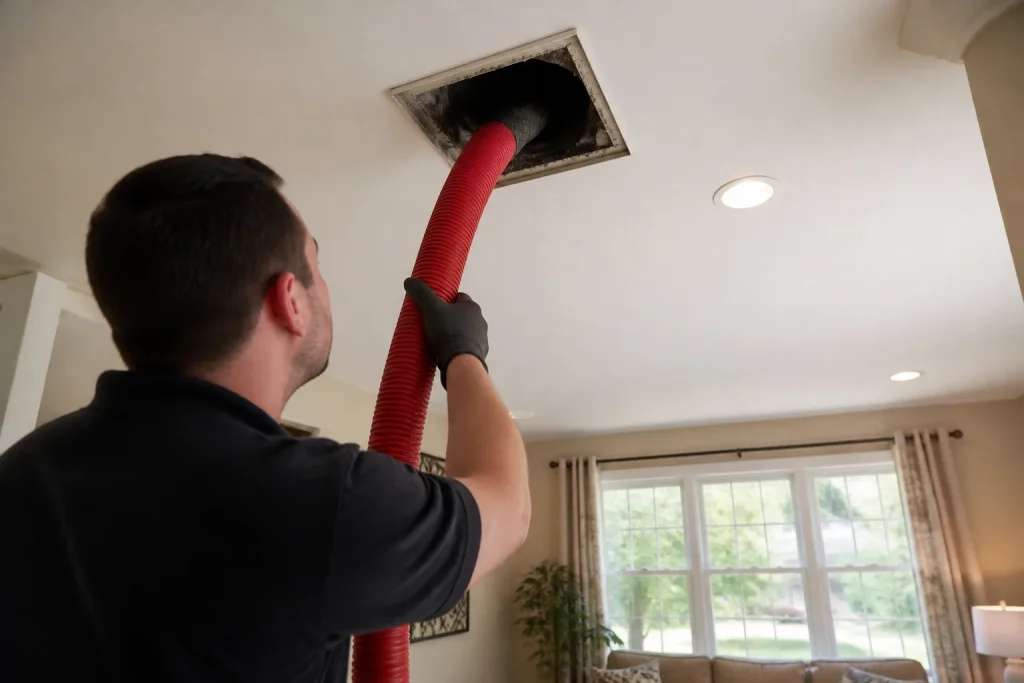
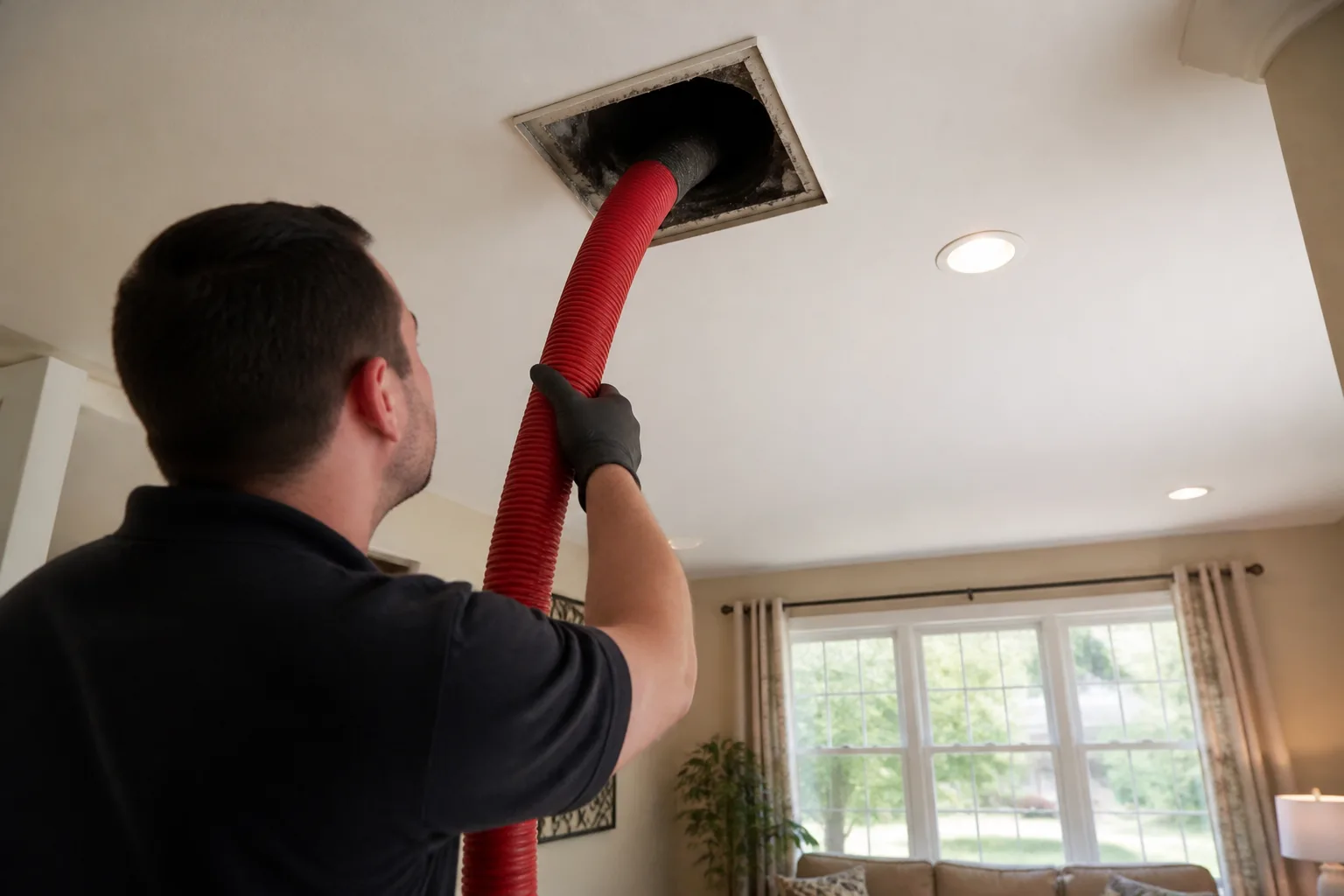
Real emergency-capable work looks like this. The technician sets up containment around the work area, hooks a high-CFM vacuum to the system so the whole duct network runs under negative pressure, then agitates the ducts with a rotating brush head. Dust and debris travel out of the house through the filter, not into your kitchen. That’s the difference between cleaning a system and stirring one up.
An HVAC repair company fixes the equipment. It doesn’t necessarily clean the ductwork, and it usually isn’t set up for remediation-grade containment. A handyman can patch a hole but can’t run a commercial vacuum and a camera through a duct run. For contaminated systems in Black Rock, this distinction matters more than the price of the visit. This is exactly the kind of job that calls for air duct cleaning from a company that owns the remediation-grade gear, not a general repair truck with a wet-dry vac in the back.
What Equipment Should an Emergency-Capable Company Show Up With?
A legitimate emergency response arrives with more than a vacuum and a brush. When we pull up in Black Rock, the gear on hand matches the tier of the problem. If a company shows up with a consumer shop vac and nothing else, that’s your cue to send them home politely. Here’s what a genuinely equipped response includes.
- A truck-mounted or high-CFM portable vacuum. We run Rotobrush and Nikro systems, the same duct cleaning equipment commercial contractors and restoration crews use. High airflow is what moves debris out of the system; a shop vac doesn’t move enough air.
- Containment and negative-air equipment. Abatement Technologies filtration units keep the work area sealed and the air filtered, which is standard practice in remediation work. This is what stops contamination from escaping into the room.
- An inspection camera. A camera on a flexible reel lets the technician see inside the duct, confirm what’s actually there, and photograph it before and after. Without one, you’re trusting the technician’s word about what was cleaned.
- Antimicrobial and deodorization capability. Sanitizing treatments after the cleaning, and fogging where odor has soaked into surfaces, are part of the job. We apply Guardsman sanitizing treatments post-cleaning so there’s a named standard behind the work.
- Repair and sealing tools. If the inspection reveals a gap, a crushed flex run, or a disconnected joint, the same visit should include the fix. Cleaning a system that leaks just means it gets dirty again fast.
If you’ve been searching for HVAC cleaning because the whole system needs attention, ask the company on the phone what equipment they bring. A specific answer (brand names, camera, containment) is a good sign. A vague one isn’t.
Why Older Black Rock Homes Are More Vulnerable
Black Rock’s pre-1980 housing stock creates specific emergency vulnerabilities that newer construction doesn’t face. In our experience, the older homes around here have duct systems that were never designed for the way they’re used today, and that shows up most when something goes wrong.
Two things come up again and again. First, flex duct retrofits. Many older homes had sheet metal runs replaced with flexible duct at some point, and those retrofits are often pinched, poorly supported, or connected with tape that has failed. A rodent or a flood finds those weak points first, and the contamination spreads farther before anyone notices. Second, unlined masonry chases. Older homes sometimes route ducts through interior chimneys or chases with unlined brick. In humid weather that masonry sweats, and moisture in an unlined chase is a breeding ground for mold once a leak or a flood has introduced spores. A newer home with lined, insulated runs doesn’t have that problem.
What this means for a Black Rock homeowner facing an emergency: the inspection matters as much as the cleaning. A technician needs to check the retrofitted runs and the chase, not just the register you can see, because the real problem is often somewhere in the middle of the system.
When to Call a Pro
Call us when the system is off and you’re not sure what caused the problem, when there’s water, smoke, pest evidence, or a smell you can’t trace, or when an inspection turned up damage no one has fixed. If you want to keep it short: any Tier 1 problem needs a call now; the rest can wait for a scheduled visit with proper equipment. We answer 24/7. Fast dispatch from 7am to 7pm, Sunday through Friday.
Related services in Black Rock: if the emergency has left you thinking about long-term air quality, we can install Honeywell and Aprilaire filtration and humidity products on the same visit that handles the cleaning. And if you’ve never had your dryer vent cleaning done, a clogged dryer vent is a fire risk that’s worth checking while we’re there.
The Bottom Line
Separate the genuinely urgent from the merely stressful. Sewage, flood contamination, and fire residue need a fast response with containment and filtration. Pest intrusion is urgent but not a same-hour crisis. A sudden odor usually calls for a scheduled assessment with an inspection camera. In every case, shut the system down, photograph the scene, find the source, and only then call. That one sequence protects your home and gives a technician what they need to plan the job.
You can see how your own ducts ran before and after on camera, so you’re not guessing whether the work happened. Cleaning, sealing, sanitizing, and the products that keep the system cleaner long term are all handled by one team. If you’re in Black Rock and need help, Air Duct Cleaning Black Rock offers free estimates. Call (855) 337-1198. We answer 24/7, with fast dispatch from 7am to 7pm, Sunday through Friday.
Frequently Asked Questions
It’s a real emergency if sewage, floodwater, or fire residue got into the duct system. Those need the system shut off and a technician with containment and filtration equipment. Pest intrusion is urgent but can usually wait a day. A sudden odor with no obvious source calls for a scheduled inspection. If you’re not sure which group you’re in, call (855) 337-1198 and describe what happened; we answer 24/7.
No. Keep the system off at the thermostat. A running blower pushes contamination from the affected area into every duct in the house, including the clean ones. Shutting it off is the single most important thing you can do before anyone arrives. Once it’s off, photograph the scene and note when you first noticed the problem.
Low quotes usually mean low equipment. A company that shows up with a shop vac and a brush isn’t running a truck-mounted or high-CFM vacuum, and it isn’t setting up HEPA containment or negative air. That’s a cleaning, not a remedy, and it can spread contamination rather than remove it. Ask what equipment the company brings before you book, and ask for before-and-after photos so you can see the work happened.
There’s no universal number. A system that’s clean and well sealed can go years between cleanings. What triggers one is an event: water intrusion, fire residue, pest activity, a renovation that dumped dust into the return, or a move-in where you don’t know the system’s history. If you’re due for one or you’ve just had an event, call (855) 337-1198 for a free estimate and we’ll tell you honestly whether the timing is right.
Written by the team at Air Duct Cleaning Black Rock.
Need Air Duct Cleaning Help?
Call Air Duct Cleaning Black Rock - the local pro we connect you with is licensed and insured, here with fast help in Black Rock.
(855) 337-1198